Why Your Weight Loss Has Stalled (And How To Break Through)
You've been doing everything right. Calories are on point. You're training. You're hitting your steps. The scale was dropping every week — and then it just... stopped.
You haven't changed anything. You're eating the same food, doing the same workouts. So what gives?
This is where most blokes panic. They think their metabolism has "adapted." They think something's broken. They start Googling "metabolic damage" at 11pm and spiralling.
Your metabolism didn't break. You just need to understand what actually happened.
The Gap Between In And Out
Fat loss works because of a gap. A gap between the energy you eat and the energy you burn. When that gap exists, your body pulls from stored fat to make up the difference. That's it. That's the whole game.
When you first start a fat loss phase, that gap is nice and wide. You're eating less, you're moving more, and the scale responds. Week 1 — down. Week 2 — down. Week 3 — still dropping.
But here's the thing nobody tells you: that gap is slowly closing the entire time.
Two things are happening:
- You're lighter. A lighter body burns fewer calories doing the same activities. The bloke who weighed 90kg three weeks ago now weighs 87kg — he's burning less just by existing.
- You're fitter. Your body has gotten more efficient at the exercise you're doing. Those 6,000 steps burn fewer calories than they did a month ago.
So even though you haven't changed a thing — same food, same steps, same training — the gap has shrunk. And when the gap closes, the scale stops.
That's not a plateau. That's not your metabolism breaking. That's just physics.
You Slow Down, Not Your Metabolism
This is the part that catches every single bloke off guard.
When you're in a calorie deficit, your body doesn't just sit there and accept it. It fights back — but not in the way you think.
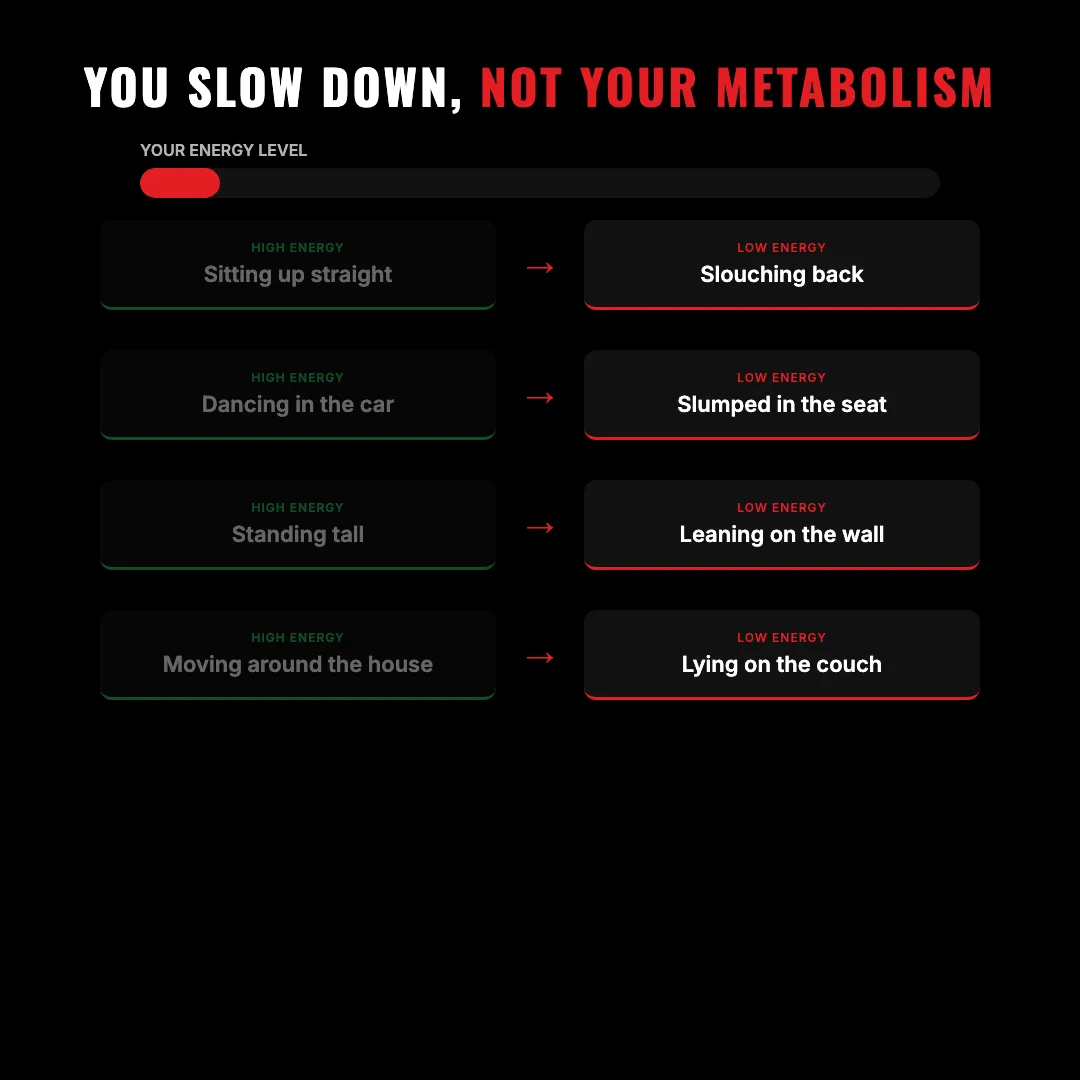
Your metabolism doesn't slow down. YOU slow down.
Here's what actually happens. When you're in a deficit for a while, you unconsciously start moving less throughout the day. We're not talking about your workouts — those stay the same. We're talking about everything else.
- You stop fidgeting as much
- You slouch instead of sitting up straight
- You lean against walls instead of standing
- You stop dancing in the car to your music
- You take the lift instead of the stairs without even thinking about it
- You sit down the moment you get a chance
None of this is conscious. You don't decide to do it. Your body just quietly dials down your movement to conserve energy. And all those tiny movements added up to a lot more calorie burn than you'd think.
This is called non-exercise activity thermogenesis — or in plain English, all the calories you burn from moving around that isn't actual exercise. And it drops significantly in a deficit.
So the gap closes from both sides. You're eating the same, but you're burning less — because you're lighter, fitter, and unconsciously moving less.
Key takeaway: When the scale stalls, it's not because something is wrong with your body. The gap between what you eat and what you burn has simply closed. Your body is lighter, more efficient, and you're unconsciously moving less. The fix isn't to panic — it's to reopen the gap.
Open The Gap
This is the framework we use with every single client at BBT, and it works every time.
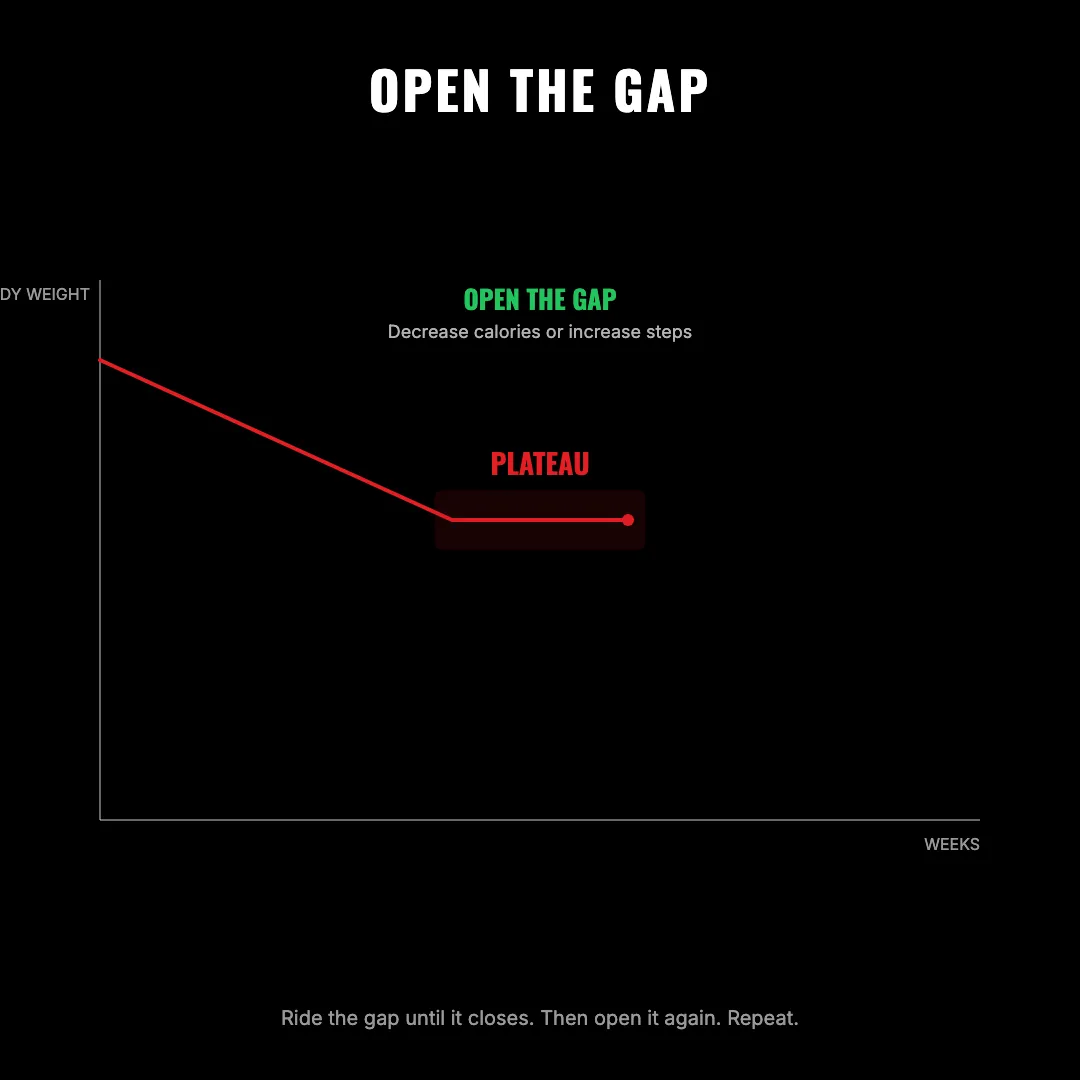
When fat loss stalls, the gap between calories in and calories out has closed. Your job is to widen it again. We call this Open the Gap.
You've got three levers:
- Decrease calories slightly — drop by 100-200 calories. Not a massive slash. Just enough to reopen the gap.
- Increase steps — bump your daily target up by 1,500-2,000 steps. This directly combats the unconscious slowdown.
- Add a bit of cardio — one or two light sessions a week. Nothing crazy. Just enough to widen the gap from the output side.
You don't need to do all three at once. Pick one or two. Make the adjustment. Then ride that new gap until it closes again. When it does — and it will — make another small adjustment. Repeat.
That's the whole game. Open the gap. Ride it. It closes. Open it again. Keep going until you're where you want to be.
A Real Example — How This Plays Out
Let's say we've got a bloke — 90kg, eating 2,000 calories a day, walking 6,000 steps. Nice wide gap. He's losing about 0.5kg a week.
Weeks 1-3: Scale is dropping like clockwork. 0.5kg per week. He's feeling good. Everything is working.
Week 4: Rate slows to 0.3kg. Still losing, but the gap is tightening. He's lighter. He's fitter. He's unconsciously moving a bit less.
Week 5: The scale hasn't moved. He's now 87kg. The gap between what he eats and what he burns has fully closed.
This is where most blokes throw in the towel. They think the diet has stopped working. They think they need to try something completely different.
Nope. They just need to Open the Gap.
So we make two small adjustments:
- Drop calories from 2,000 to 1,800
- Bump steps from 6,000 to 8,000
That's it. Nothing dramatic. No meal plan overhaul. No new training program. Just two small tweaks to reopen the gap.
Week 6: Scale drops 0.4kg. He's losing again.
He rides that new gap for another 3-4 weeks until it closes. Then he makes another small adjustment. Drop to 1,700 calories. Bump steps to 9,000. Gap opens. Scale moves. Repeat.
This is how every successful fat loss phase works. Not one big dramatic change — a series of small, strategic adjustments over time.
Don't Forget The Core Three
While you're managing the gap, the fundamentals still need to be locked in. We call these The Core Three:
- Protein: 2.2 grams per kilogram of lean body weight. This protects your muscle while you're in a deficit. Non-negotiable.
- Energy balance: This is the gap we've been talking about. Know your numbers. Track your intake. Watch your output.
- Lift progression: Keep pushing your lifts forward. Progressive overload doesn't stop because you're cutting. If your lifts are stalling, your nutrition or recovery needs attention.
If any one of The Core Three is off, opening the gap won't matter as much. You'll lose weight, but you'll lose muscle with it — and you'll end up looking soft instead of built.
Stop Blaming Your Metabolism
Look — I get it. When the scale stops moving, it feels like something is broken. It feels like your body is working against you.
But it's not. Your body is doing exactly what it should. You got lighter. You got fitter. You unconsciously slowed down. The gap closed.
That's not a problem. That's just how fat loss works. And now you know what to do about it.
- Scale stalls? Open the Gap — drop calories slightly, increase steps, or add a bit of cardio
- Keep The Core Three locked in — protein, energy balance, lift progression
- Remember: you slow down, not your metabolism — so increase your daily movement to fight back
- Small adjustments over time. Not dramatic overhauls. That's the game.
Every bloke who's ever gotten lean has hit this wall. The ones who break through are the ones who understand the gap — and know how to open it again.
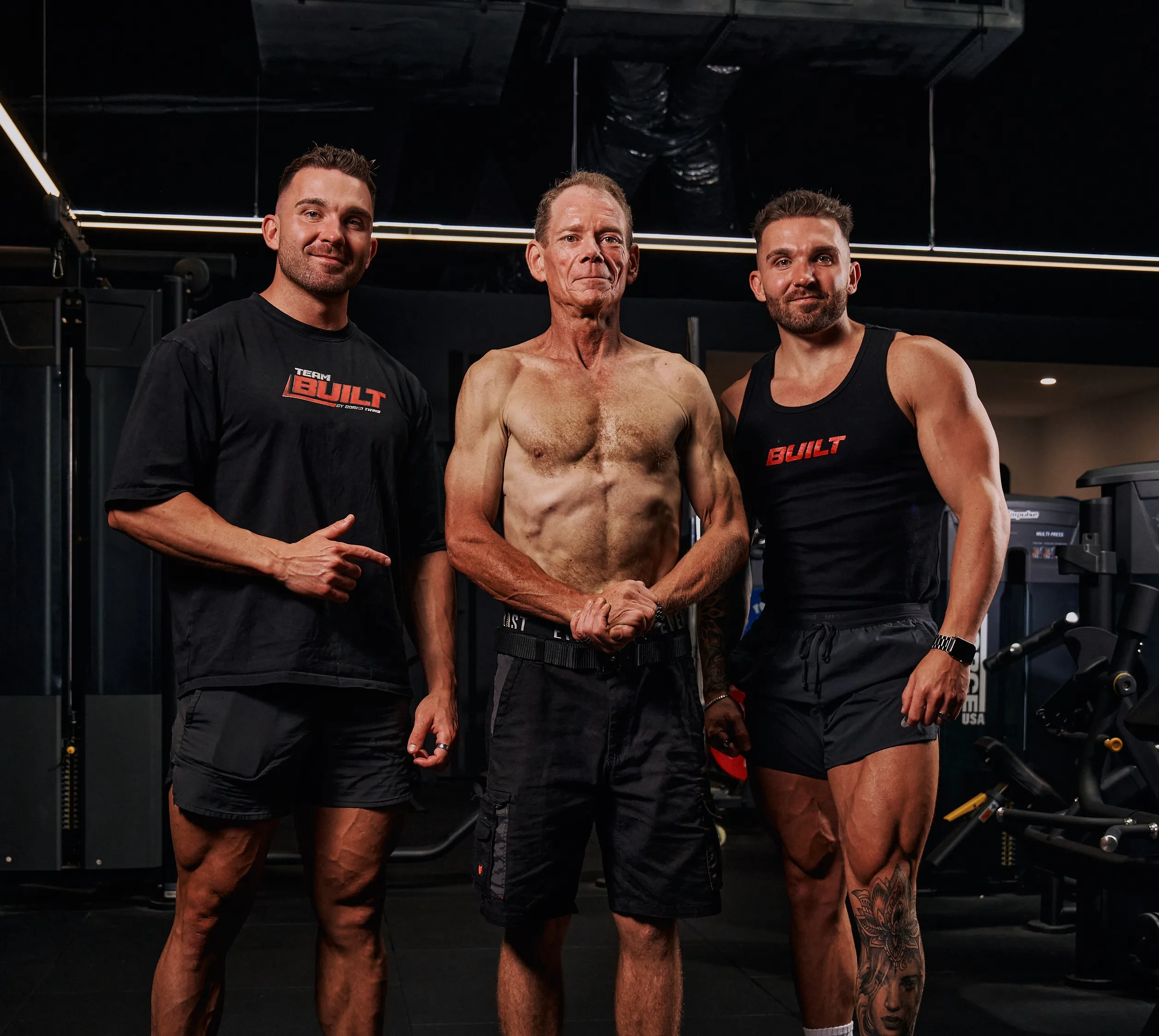
Sam Board
Founder & Head Coach at Built Body Transformations. 1,700+ clients coached.